Vetted by Top Lists: 25 Most Beautiful College Campuses in America
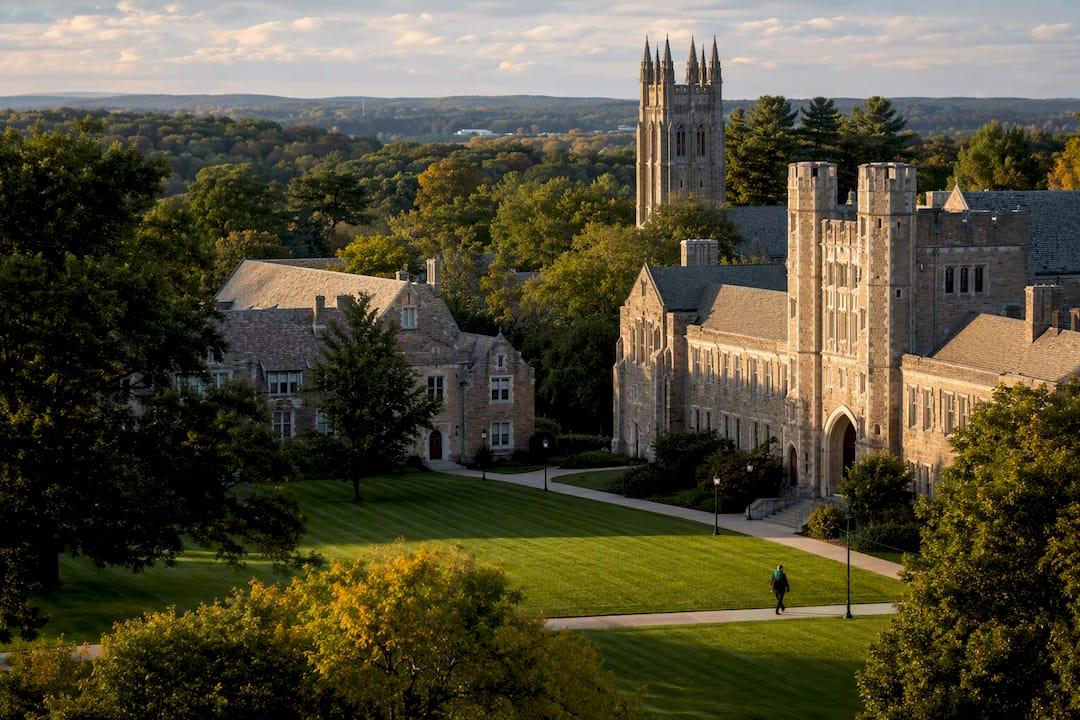
This is a curated list of the 25 most beautiful college campuses in the United States, chosen from editorial rankings, student review signals, and campus-specific research. You’ll find named picks with concise highlights, real visiting tips, and the sources behind every selection below.
TL;DR:
The most beautiful campuses, like Sewanee and Berry College, are renowned for their expansive, scenic settings and distinctive architecture that attract visitors and shape perceptions.
Campus character, including feel and community, often outweighs aesthetics alone in influencing student attraction and success, beyond just visual appeal.
Visitors should plan their trips considering seasonal highlights, access rules, and respectful behavior, especially regarding restricted areas and drone policies.
University landscapes, architecture, and landmarks are key elements that contribute to both campus beauty and unique identity, impacting visitor experience.
Ultimately, selecting a campus based on beauty should also involve assessing personal fit and how the environment aligns with student goals and lifestyle.
Table of Contents
Why Campus Beauty Actually Matters When You’re Choosing a School
Campus beauty isn’t just eye candy for a brochure. Stefan Hyman, associate vice president for enrollment management at San Diego State University, argues that what draws people to a campus comes down to character more than any single building or vista. That word matters. A gorgeous quad means little if the campus feels cold or disconnected from student life, and a modest campus can feel magnetic if its character is strong.
We weighed a mix of signals to build this list, the same categories admissions officers and campus planners tend to reference:
Physical setting — mountains, coastlines, forests, or river valleys that shape the campus footprint
Architecture — Gothic, Georgian, Spanish Revival, Collegiate Gothic, or contemporary design cohesion
Landscaping — designed gardens, quads, and tree canopy, sometimes from historic landscape architects
Distinctive landmarks — chapels, towers, lakes, or signature buildings that anchor a campus visually
Visitor access — how easily the public can actually walk the grounds and see what makes it special
US News frames campus beauty as a real factor in how prospective students form impressions, which is exactly why this list leans on editorial roundups, student review platforms, and official campus pages rather than a single source.
The Most Beautiful College Campuses in America
Beauty is subjective, but these 25 campuses show up again and again across rankings, travel sites, and firsthand accounts. Here’s what actually sets each one apart.
1. Sewanee: The University of the South
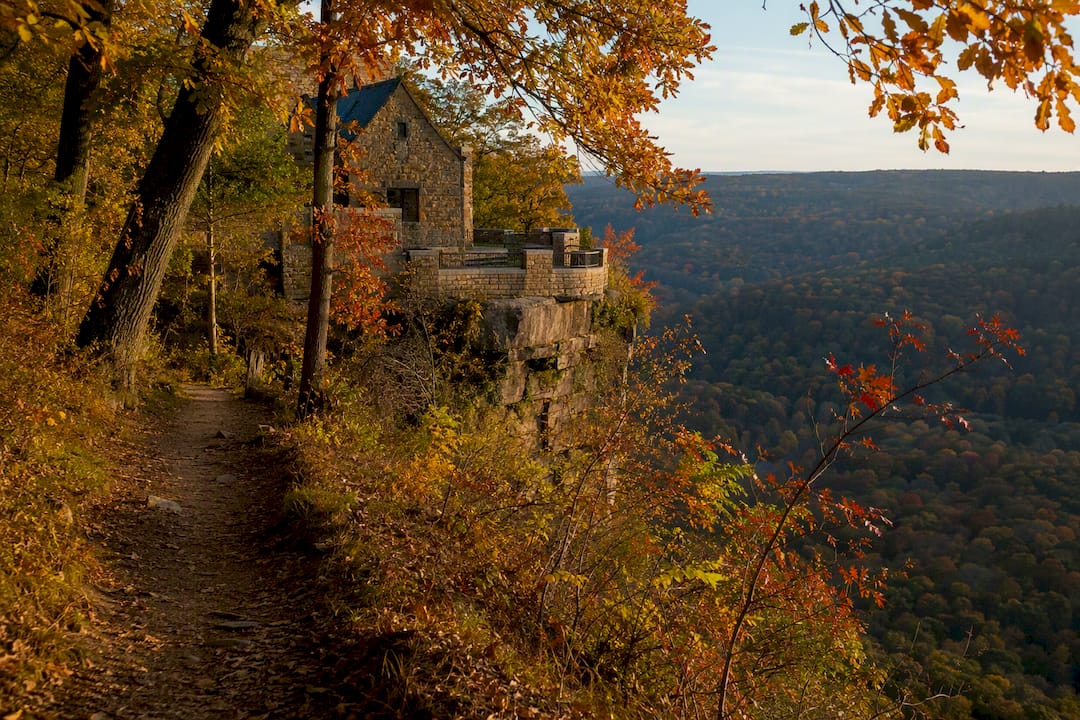
A University of Melbourne Online study named Sewanee the most beautiful college campus in the country, pointing to how frequently TripAdvisor reviewers use the word “beautiful” to describe it. The reason becomes obvious once you’re there: Sewanee sits on a 13,000-acre plateau called “the Domain,” with sandstone buildings, hiking trails, and cliffside overlooks that feel closer to a national park than a university. Visit in October, when the Cumberland Plateau’s hardwood forest turns amber and crimson around the campus’s Gothic stonework.
2. Berry College
Berry, in Rome, Georgia, claims the largest contiguous campus in the world at roughly 27,000 acres, mixing English Gothic architecture with mountains, lakes, and a resident deer population. The Ford Buildings and Frost Chapel anchor the historic core, while miles of hiking trails let visitors explore the surrounding wilderness. Go early morning for mist rolling off the lake near Oak Hill.
3. Duke University
Duke’s West Campus is built almost entirely from Duke Gothic stone, culminating in the 210-foot Duke Chapel tower that dominates the Durham, North Carolina, skyline. The Sarah P. Duke Gardens, a 55-acre landscaped preserve on campus, rank among the most photographed academic gardens in the South. Spring brings the gardens’ terraced roses and wisteria into full bloom, making April the best visiting window.
4. Pepperdine University
Pepperdine’s Malibu, California, campus overlooks the Pacific from coastal bluffs, with Spanish Mission style buildings in white stucco and red tile roofs. The Alumni Park fountain and its ocean backdrop make this one of the most photographed college views in the country. Sunset is the obvious time to visit, but weekday afternoons avoid the tourist crowds drawn to nearby Malibu beaches.

5. Wellesley College
Wellesley describes its own 500-acre campus as shaped by landscape architecture tied to the Olmsted design tradition, centered on Lake Waban. The lake, wooded shoreline, and stone academic buildings create a New England setting that changes character with every season. Fall foliage along the lake path in late October is the campus at its most striking.
6. Stanford University
Stanford’s Main Quad combines Romanesque sandstone arcades with Spanish Colonial red tile roofing, framed by the 285-foot Hoover Tower. Palm-lined avenues and the Rodin Sculpture Garden give the Palo Alto, California, campus a Mediterranean feel that’s rare among American research universities. Visit midweek to see the quad without the graduation-season crowds.
7. University of Notre Dame
Notre Dame’s Golden Dome, topped by a statue of the Virgin Mary, anchors a campus built around two lakes and the Basilica of the Sacred Heart in South Bend, Indiana. The Grotto of Our Lady of Lourdes offers a quieter, contemplative counterpoint to the dome’s grandeur. Football Saturdays are electric but crowded; a quiet weekday walk shows the campus better.
8. Princeton University
Princeton’s Collegiate Gothic architecture, epitomized by Nassau Hall and the Graduate College’s Cleveland Tower, gives the New Jersey campus an Oxford-like density. Ivy-covered stone and manicured quads make it one of the most architecturally cohesive campuses in the country. Early morning light on Blair Arch is a favorite among campus photographers.
9. Kenyon College
Kenyon’s Middle Path, a mile-long gravel walkway lined with sandstone Gothic buildings, cuts through the heart of the Gambier, Ohio, campus. The setting on a wooded ridge above the Kokosing River gives Kenyon a secluded, almost monastic feel. Autumn transforms the path into a tunnel of color.
10. Vanderbilt University
Vanderbilt holds official arboretum status, with more than 190 species of trees planted across its Nashville, Tennessee, campus. The mix of Gothic, Georgian, and modern architecture sits inside that living collection, making it one of the greenest urban campuses in the South. Spring is peak bloom for the dogwoods and magnolias near Kirkland Hall.
11. University of San Diego
USD’s Spanish Renaissance architecture, with tiled domes and ornate facades at Founders Chapel and the Immaculata, sits on a bluff overlooking Mission Bay. The campus reads more like a Mediterranean villa complex than a typical American university. Late afternoon light on the Immaculata’s blue dome is the signature shot.
12. William & Mary
Founded in 1693, William & Mary’s Wren Building is the oldest college building still in use in the country, part of a Colonial Williamsburg, Virginia, setting shared with the historic district next door. Brick pathways, boxwood gardens, and Georgian architecture give the campus a lived-in historic weight few schools can match. Combine a campus visit with the adjacent Colonial Williamsburg for a full day of history.
13. Rhodes College
Rhodes, in Memphis, Tennessee, was built almost entirely in Collegiate Gothic style using local limestone, giving the compact campus a uniform stone aesthetic rare outside the Northeast. The Bryan Campus Life Center and Halliburton Tower stand out against manicured quads. The campus is small enough to see thoroughly in an hour, making it an easy add to a Memphis visit.
14. University of Colorado Boulder
CU Boulder’s signature is its rural Italian style architecture in local sandstone, set directly against the Flatirons rock formations rising just west of campus. Few American campuses have a natural backdrop this dramatic this close to the buildings themselves. Sunrise light on the Flatirons from the Norlin Quad is worth an early start.
15. Indiana University Bloomington
Indiana University’s Bloomington campus mixes Indiana limestone Collegiate Gothic buildings with wooded ravines, limestone footbridges, and two campus lakes. The Old Crescent area, the university’s original historic core, remains one of the best-preserved 19th century academic districts in the Midwest. Fall foliage over the limestone bridges near the Jordan River is a local favorite.
16. Cornell University
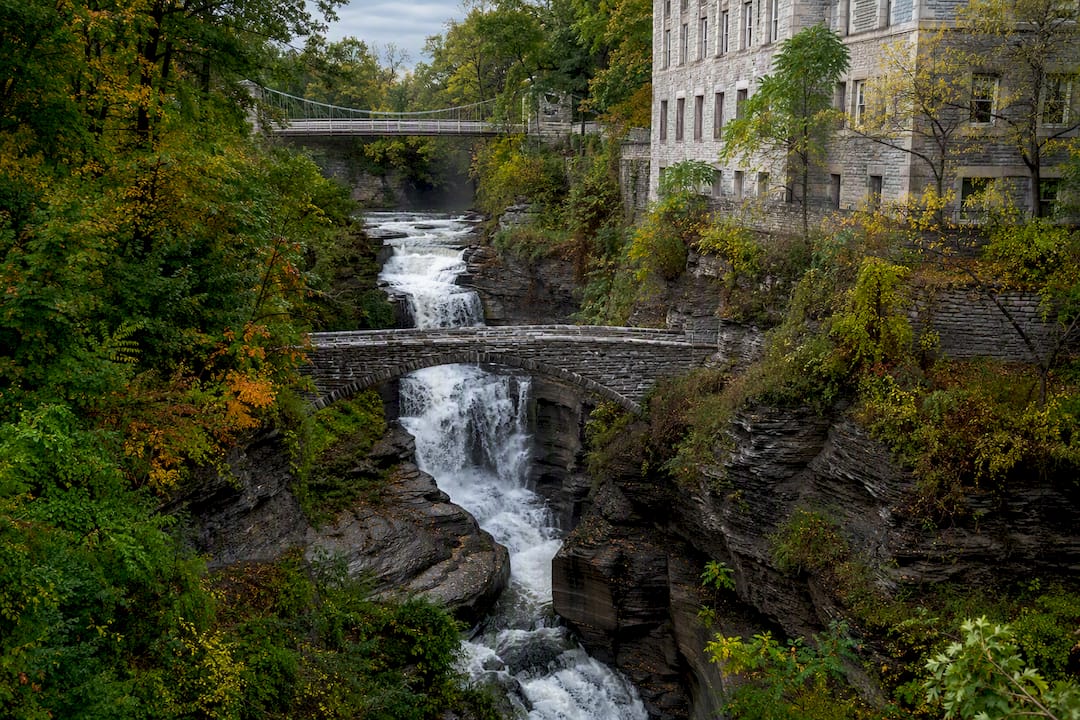
Cornell’s Ithaca, New York, campus sits above two gorges, with waterfalls visible from several academic buildings and the iconic suspension bridges crossing Fall Creek and Cascadilla Gorge. The combination of Gothic and Beaux Arts buildings with dramatic gorge views is genuinely unusual among American universities. Visit after rainfall for the fullest waterfall flow.
17. Dartmouth College
Dartmouth’s Hanover, New Hampshire, campus centers on the Dartmouth Green, a rectangular common ringed by Georgian brick buildings and framed by the surrounding White Mountains. The setting feels closer to a New England village than a typical university quad. Winter brings a postcard quality few campuses can match, though foliage season draws the largest crowds.
18. Furman University
Furman’s Greenville, South Carolina, campus includes a 30-acre lake, a Japanese garden with a reflecting pool, and a bell tower that’s become the school’s visual signature. The lake and gardens give Furman one of the more resort-like feels among Southern liberal arts campuses. Cherry blossom season in March around the Japanese garden draws visitors well beyond current students.
19. Wake Forest University
Wake Forest’s Winston-Salem, North Carolina, campus was rebuilt in Georgian style brick in the 1950s, giving it a cohesive, colonial-inspired look centered on the Quad and Wait Chapel. Reynolda Gardens, adjacent to campus, adds formal landscaped grounds open to the public. Fall visits pair well with the historic Reynolda House estate next door.
20. Yale University
Yale’s New Haven, Connecticut, campus blends Collegiate Gothic residential colleges with the modernist Beinecke Rare Book Library, creating an architectural range few campuses attempt. Harkness Tower’s carillon and the wrought-iron gates threading through campus give it a fortress-like character. Weekday mornings offer the clearest view of the courtyards without tour groups.
21. University of Virginia
UVA’s Academical Village, designed by Thomas Jefferson, remains one of the most historically significant campus plans in the country, centered on the Rotunda and a lawn lined with pavilions. UNESCO recognizes the Academical Village as a World Heritage Site. Visit in early morning for photos of the Rotunda without foot traffic across the Lawn.
22. Smith College
Smith’s Northampton, Massachusetts, campus was designed with input from the Olmsted firm, giving it a botanic garden quality unusual for a college of its size. Paradise Pond and the Lyman Plant House greenhouse complex are the campus’s signature features. Spring bulb displays around the pond are a favorite subject for photographers.
23. Colgate University
Colgate’s Hamilton, New York, campus climbs a hillside overlooking the surrounding valley, with Georgian and Colonial Revival buildings arranged around the Academy Quad. The Thirteen Sisters, a row of elm trees planted by the founding class, still lines the main walkway. Fall color across the valley view from the top of campus is the reason most visitors come.
24. Lewis & Clark College
Lewis & Clark’s Portland, Oregon, campus sits on a wooded bluff with formal gardens, reflecting pools, and views toward Mount Hood on clear days. The estate-like grounds were originally a private residence before the college acquired them. Visit on a clear autumn day when Mount Hood is visible from the south lawn.
25. Bowdoin College
Bowdoin’s Brunswick, Maine, campus combines Georgian brick academic buildings with a substantial pine forest that doubles as a research preserve. The quad’s mature elm trees and coastal Maine light give it a distinct regional character among New England liberal arts schools. Early fall, before peak foliage crowds hit the Maine coast, is the ideal visiting window.
How to Plan a Campus Visit Without Wasting the Trip
Most campuses welcome visitors, but access rules vary. Check each school’s admissions or visitor page before you go. Many, including several on this list, require advance registration for official tours even though the grounds themselves stay open to the public.
Confirm visiting hours, parking, and whether specific buildings (chapels, libraries, gardens) require separate access
Time your visit for fall foliage in the Northeast and Midwest, spring blooms in the South and mid-Atlantic, and golden hour for the best light on stone architecture
Avoid move-in weekends, finals week, and commencement, when foot traffic and closures spike
Bring a wide-angle lens for architecture and a longer lens for landscape details like lakes or gardens
Stay off restricted lawns, respect posted quiet zones near libraries and chapels, and never block building entrances for a shot
Pro Tip: Call ahead if you want a specific interior, like a chapel or historic library reading room. Many are open during the academic year but locked on weekends and holidays.
Drones deserve a special note. Several universities restrict or ban drone flights over campus for safety and privacy reasons, so check each school’s specific policy before you bring one, rather than assuming public access to the grounds extends to airspace above them.
How We Compiled This List of Beautiful Campuses
This roundup cross-references three kinds of signals rather than relying on one ranking. Editorial lists from outlets like US News and Research surface campuses that show up repeatedly across independent rankings. Review-derived signals, like the TripAdvisor language behind Sewanee’s top ranking, capture what actual visitors notice that editors sometimes miss. Official campus pages, like Wellesley’s own description of its landscape design, add factual grounding on acreage, architects, and landscape history.

Beauty is genuinely subjective. A student who values a compact urban campus with high architectural cohesion, like Princeton or Yale, may rank it above a sprawling rural domain like Sewanee or Berry, and both preferences are valid. Weigh your own priorities against this list rather than treating it as gospel.
What Campus Character Tells Families During the College Search
Campus beauty comes up constantly in our conversations with families, and we tell them the same thing every time: aesthetics matter, but only as a signal for something bigger. A student who feels drawn to a campus’s character, whether that’s Sewanee’s mountaintop isolation or Cornell’s gorges, is often responding to a fit that goes beyond looks. Daily lived experience, not the photo-op quad, is what determines whether a student thrives somewhere for four years.
That’s why campus visits belong alongside academic and social fit conversations, not instead of them. When we work with families on college admissions strategy, we help students separate “I loved the vibe” from “I can actually see myself here at 8 a.m. on a Tuesday in February.” Both questions matter, and neither replaces the other.
— Randy Pryor
Finding the Right Campus Fit, Not Just the Prettiest One
A gorgeous quad doesn’t guarantee the right academic environment, social scene, or admissions odds for your student, and narrowing a list of 25 stunning campuses down to a realistic, competitive application strategy is a different problem entirely. College admissions counselors work with families to match student priorities, whether that’s a rural liberal arts setting, an urban research campus, or a specific academic program, against real admissions data and fit, not just curb appeal.

Counselors, including some former admissions officers, help students figure out which of these beautiful campuses align with their goals, then build application strategies accordingly. If your family is weighing campus visits against a realistic admissions plan, book a free admissions strategy session and let’s talk through what fit really means for your student.
Sources
FAQ
What are the most beautiful college campuses in America?
Campuses that appear most consistently across editorial rankings and visitor reviews include Sewanee, Berry College, Duke, Pepperdine, Wellesley, Stanford, Notre Dame, and Princeton, each known for distinct settings ranging from mountaintop domains to Gothic quads.
What college is ranked number one for happiest students?
Happiness rankings vary by source and methodology, and no single list in this roundup’s research covers that specific ranking, so it’s worth checking a dedicated student-satisfaction survey rather than a campus-beauty list for that answer.
What college has the most beautiful campus?
A University of Melbourne Online study named Sewanee: The University of the South the most beautiful campus in the country, citing how frequently TripAdvisor reviewers describe its 13,000-acre Domain as beautiful.
Is there a college that costs $90,000 a year?
There’s no single fixed figure like $90,000 that applies universally. Total cost of attendance varies widely by institution, financial aid, and residency status, so Niche recommends using each school’s own Net Price Calculator rather than relying on a flat number.
Does campus beauty actually affect admissions decisions?
Campus beauty doesn’t directly influence whether a student gets admitted, but it does shape how students perceive fit during the search process, which affects where they apply. Working through that fit question with a college admissions counselor helps separate aesthetic appeal from academic and social match.
Recommended
Comments