Orlando Teens: Turn Local Volunteer Work Into a Strong College Asset
Start at Orlando Cares, the Orange County Library System’s Teen Volunteer League, or Hands On Orlando. All three accept teens from early high school ages; most require parental consent, and some involve background checks before service begins. Check each program’s age minimums and application page first, then apply. That’s the whole first move.
TL;DR:
Most volunteer programs in Orlando require parental consent and background checks, especially for roles involving vulnerable populations or longer commitments.
Structured options like the Orlando Fire Department Explorer Program and hospital volunteering build leadership and experience that are highly valued by college admissions.
Logging hours accurately with signed logs or official confirmation is crucial, as many schools and scholarships demand detailed documentation rather than simple memory.
Consistent, long-term service in a chosen cause demonstrates growth and responsibility, making it more impactful for college applications than scattered one-day events.
It is advisable to start application processes at least six to eight weeks early due to fixed session deadlines for many programs.
Table of Contents
Where Orlando Teens Can Start Volunteering Right Now
Orlando gives teens more entry points than most families realize, and the right one depends on age, interest, and how much structure a student wants. Here’s a working shortlist, organized by the kind of commitment each one asks for.
Orlando Cares functions as the city’s volunteer clearinghouse. Teens 14 to 17 can filter listings by youth eligibility, and most roles route through the same Volunteer Release/Waiver and Parental Consent for Minor Background Check process. Tasks range from event support at city festivals to park beautification days. There’s no single application deadline; new opportunities post throughout the year, which makes it a good default starting point for a family still figuring out what fits.
Hands On Orlando works differently. Rather than one fixed role, the nonprofit matches volunteers to partner organizations based on specific skills, including bilingual ability, which can put a motivated teen into higher-responsibility work faster than a generic sign-up sheet would.
Orange County Library System’s Teen Volunteer League is the lowest-barrier option on this list. Teens earn 1 to 2 hours per event through assembly projects, program support, and even virtual advisory meetings, with individual events like Community Connections listing exact hours and branch details in advance. It’s ideal for students stacking hours around a busy course load.
Orlando Fire Department Explorer Program suits teens who want something closer to a real apprenticeship. Ages 14 to 20 qualify, but the commitment is real: bi-weekly meetings, training modules, and ride-along experiences with working crews.
Orlando Health’s teen volunteer programs at Orlando Regional Medical Center and Winnie Palmer Hospital run on strict session calendars. Expect multi-stage screening, GPA checks, and health clearances, with summer, fall, and spring application windows that close well before the session starts.
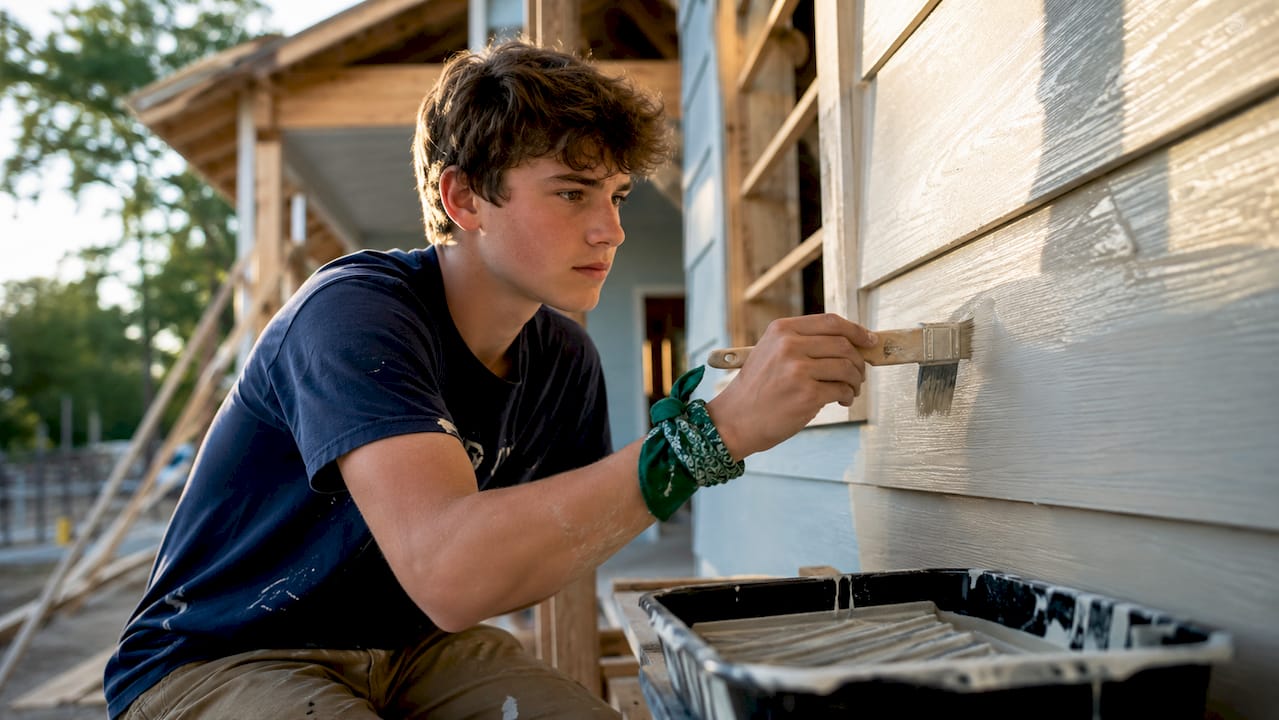
Habitat for Humanity Greater Orlando & Osceola puts teens to work on actual build sites, but only starting at age 16. Tasks include framing support, painting, and landscaping under supervised crews.
Second Harvest Food Bank and The Mustard Seed of Central Florida cover hunger relief and clothing distribution. The Mustard Seed sets its warehouse minimum at 16, though younger teens (12 to 15) can help in other areas with an adult present.

Pet Alliance of Greater Orlando and Central Florida Animal Reserve’s Conservation Corps appeal to animal lovers. CFAR requires volunteers to be at least 16, or attend orientation with a guardian if younger, for habitat restoration and grounds work.
Applying, Paperwork, and What Screening Actually Involves
Every program on this list asks for some version of the same documentation, so gathering it early saves weeks.
Parental consent form. Nearly all youth roles require a signed waiver; Orlando Cares specifically requires a Volunteer Release/Waiver and Parental Consent for Minor Background Check.
Background check. Triggered for most roles involving vulnerable populations (hospitals, animal shelters, youth-facing events), typically at 14 or older.
Health screening. Hospital programs often require TB testing (QuantiFeron) and sometimes drug screening before the first shift.
Orientation. Nearly universal. Some, like CFAR, require a parent or guardian to attend alongside a teen under 18.
Pro Tip: Apply at least six to eight weeks before your target start date. Hospital and conservation programs run on fixed session calendars, and missing a deadline can mean waiting until the next cycle opens.
One-Off Events vs. Sustained Programs: Which One Should Your Teen Choose?
A single park cleanup and a year of Fire Explorer meetings both count as community service, but they don’t carry equal weight everywhere. One-off events (library assembly days, weekend cleanups) are great for testing interest or filling a scholarship’s hour requirement quickly. Structured programs (Fire Explorers, a library advisory seat, a season of hospital shifts) build something a single event can’t: a track record.
Admissions officers tend to favor commitment over volume. Top College Coach’s guidance on making an impact in your community points to sustained roles as the stronger signal, since they show leadership growth over time rather than a scattered list of one-day appearances. When choosing between the two, weigh:
Genuine interest in the cause, not just convenience
Realistic fit with the school-year schedule
Level of supervision and independence offered
Whether the role has a path toward a leadership title later
Logging Hours the Right Way for School and Scholarship Requirements
Florida doesn’t set one statewide minimum for service hours; requirements vary by school district, honor society, and scholarship program, so check your teen’s specific handbook. Whatever the target, documentation matters more than memory.
Keep signed logs or emailed confirmations from every site supervisor.
Save event sign-in sheets and any hour totals a program lists directly, like OCLS’s Community Connections events.
Confirm with a school counselor how hours should be formatted before submitting.
One caution: not every organization accepts court-ordered service. Habitat for Humanity Greater Orlando & Osceola currently does not, and hospital programs through Orlando Health apply similarly strict eligibility screening. Call ahead if that applies to your situation.
Turning Volunteer Work Into a Real College Application Asset
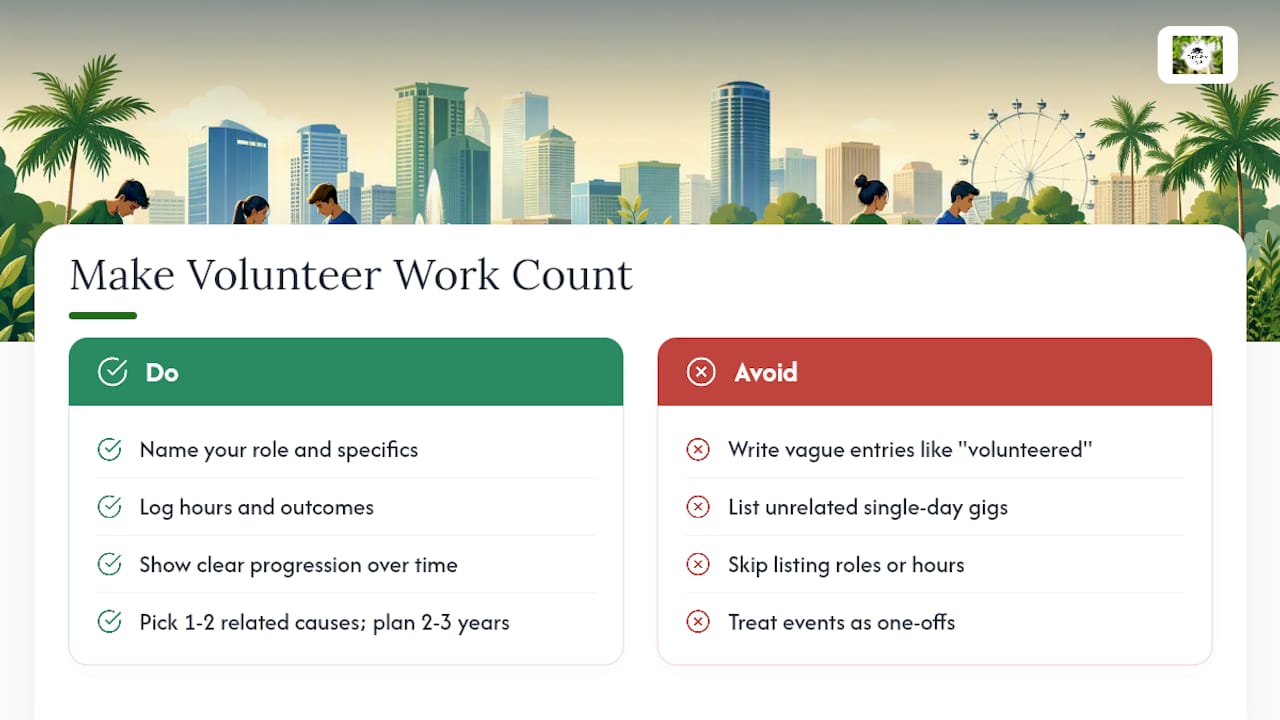
Admissions readers skim past vague entries like “volunteered at food bank.” They stop for specifics: hours logged, a title held, a problem solved. If a teen ran a Teen Volunteer League event, that’s worth naming on the activity list as a role, not just a task.
Top College Coach’s review of extracurricular activities for Ivy League admissions consistently comes back to the same pattern: reviewers reward progression. A teen who started as an event volunteer and became a shift lead or peer trainer within two years tells a more convincing story than five unrelated single-day events.
Pro Tip: Pick one or two causes tied to an academic or career interest, then plan a two to three year track. A pre-med student volunteering consistently at Orlando Health builds a far stronger essay foundation than a random assortment of unrelated one-time gigs.
Why Local, Sustained Service Still Wins
I’ve watched families chase volunteer hours like a checklist, then wonder why the essay falls flat. The programs that matter most are rarely the flashiest. They’re the ones a teen sticks with long enough to grow into responsibility. Balance matters too: academics come first, but a well-chosen, multi-year commitment beats ten scattered afternoons every time.
— Randy Pryor
How Top College Coach Helps Families Plan a Volunteer Strategy That Fits College Goals
Top College Coach is the advisory option for families who want a volunteer plan that actually connects to admissions strategy, not just a stack of hours. Where a list of local programs tells you where to sign up, our counselors help map which commitments align with a student’s academic direction, when to add leadership responsibility, and how to frame that work convincingly on applications and in essays.
Our work includes activity mapping across a student’s high school years, essay coaching that turns service experience into a genuine personal narrative, and long-term planning built around Ivy League and Top 20 university expectations. For families weighing pre-med tracks, our resources on what top colleges are looking for pair well with programs like Orlando Health’s teen volunteer track, and readers researching medical school pathways can find useful context through Orlando College of Osteopathic Medicine’s admissions data. If your family wants help building a multi-year plan around service, academics, and applications together, schedule a consultation with Top College Coach to get started.
Sources
FAQ
Where can I find volunteer opportunities for teenagers in Orlando?
Start with Orlando Cares, the Orange County Library System’s Teen Volunteer League, or Hands On Orlando, all of which list youth-eligible roles with age minimums clearly stated.
What can a teenager do for community service in Orlando?
Options range from low-commitment library events earning 1 to 2 hours to structured programs like the Orlando Fire Department Explorer Program, Habitat for Humanity build sites (16 and up), and hospital volunteering at Orlando Health.
How many community service hours are required for high school in Florida?
Florida doesn’t set one statewide hour requirement; specific totals vary by school district, honor society, and scholarship program, so check your teen’s school handbook or counselor for the exact number that applies.
Where can teens volunteer if they want something that helps a college application?
Sustained programs like Fire Explorers, hospital teen volunteering, or a Teen Volunteer League leadership role tend to carry more weight than one-off events, since they show growth and responsibility over time, a pattern Top College Coach highlights in its guidance on community impact.
Recommended
Comments