U.S. Applicants: 250–400 Word Letter of Continued Interest

A letter of continued interest is a short, formal message you send to a college or law school after a deferral or waitlist decision, reaffirming your commitment and adding real news to your file. If you’ve been deferred or waitlisted and the school allows updates, send one. Keep it brief, specific, and honest about why you’d enroll.
TL;DR:
Sending a letter of continued interest is most effective when you have a genuine, recent update that clearly strengthens your application and aligns with the school’s offerings.
Focus on your top three to five preferred schools, especially those you are most likely to enroll in, and avoid sending generic or multiple identical letters.
Keep the letter concise, under one page, and include specific updates such as grades, leadership roles, or new work experience that tie directly to your desired program.
Submit your letter within one to two weeks of the deferral or waitlist notification, and only send additional updates if you have something new and relevant to report.
A well-crafted, sincere letter with a single, meaningful update can help but is unlikely to change a decision if the school has already largely made up its mind.
Table of Contents
What Is a Letter of Continued Interest, and When Do You Send One?
A letter of continued interest exists to do two things at once: reaffirm that you still want a spot, and give the admissions committee something new to weigh. It’s not a resubmission of your application. It’s a short note that says, in effect, “here’s what’s changed, and here’s why I’m still your best yes.”
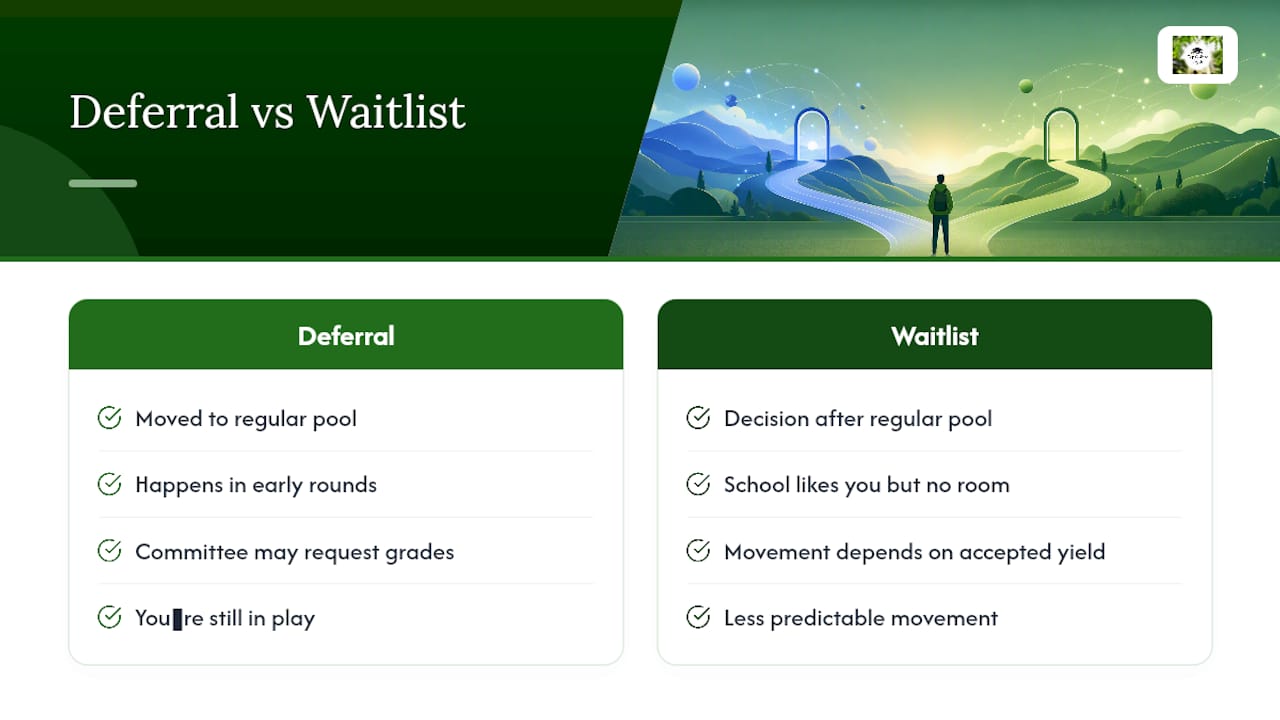
Deferral and waitlist status mean different things, and that difference should shape your letter. A deferral, common in early action or early decision rounds, means the school is moving your file to the regular pool for another look, a process explained in detail by academic articulation partnerships that help clarify transfer and evaluation procedures. You’re still in play, but the committee wants more information, often a fall semester grade report or a fuller applicant pool for comparison. A waitlist decision comes later, after the regular pool has been decided, and it means the school likes you but doesn’t have room. Movement off a waitlist depends heavily on how many admitted students accept their spots.
A continued interest letter helps most when you have a genuine update to report and a genuine case for fit. If neither applies yet, wait until one does before you write.
Should You Send a LOCI to Every School That Deferred or Waitlisted You?
No. Sending five identical letters to five schools burns time you could spend making each one stronger. Prioritize based on where you’d actually enroll and whether you have something worth saying.
Rank your deferrals and waitlist offers by genuine preference, not by which one feels most urgent.
Send a LOCI first to your top three to five choices, especially any that would be a clear “yes” if admitted.
Skip schools that explicitly ask you not to send additional materials. Some offices, like the University of Illinois, ask applicants to reach out only when they have new information to report.
Skip a school if you have nothing new to say. A letter with no update reads as noise, not commitment.
What to Include in a Strong Letter of Continued Interest
A LOCI works best when it follows a tight structure and earns its length. Committees read hundreds of these during waitlist season, so clarity beats cleverness every time.
Opening line. State who you are, your application ID or CAS number if applicable, and the decision you received.
Restate interest. One or two sentences on why this specific school remains your top choice, tied to a program, professor, or opportunity you can name.
Meaningful updates. One or two developments since you applied: a grade jump, a new leadership role, a competition result, published research, or, for law applicants, an LSAT retake or new work experience.
Tie the update to fit. Connect what’s new to what the school offers. If you joined a debate team and the school has a strong mock trial program, say so.
Commitment statement and close. A direct sentence on your intent, followed by thanks and contact information.
Keep the whole letter under one page, ideally 250 to 400 words. Formal salutation, clear paragraphs, and a professional close matter here. Purdue OWL’s business-letter guidance on formatting, contact details, and tone applies directly to a LOCI, even when you’re sending it through a portal instead of the mail.
Attach documentation only when the school asks for it or when a document genuinely strengthens your case, like an official mid-year transcript. Don’t attach your entire resume again. If you’re short on dramatic news, lean on smaller, well-framed details. Forbes’s guidance for applicants without major updates suggests reframing steady progress, a leadership shift, or a specific contribution as evidence you’re still growing into the applicant they’d want.
Pro Tip: Pick one update, not four. A single well-explained achievement, tied clearly to your intended major or specialty, lands harder than a list of minor accomplishments stacked together.
Two Annotated Templates: College and Law School
Templates work best as a starting skeleton, not a script. Adjust every bracketed section to your actual situation before you send anything.
College example (deferral or waitlist)
"Dear [Admissions Committee / Regional Representative name],
I’m writing to reaffirm my strong interest in [School Name] following my [deferral/waitlist] notification. [School Name] remains my top choice because of [specific program, research opportunity, or campus detail].
Since submitting my application, I [specific update: raised my GPA to X, took on a leadership role, won a regional award]. This growth reflects [connect to your intended major or campus community].
If admitted, I will enroll. Thank you for your continued consideration.
Sincerely, [Full name, application ID]"
Keep this one conservative and grounded in academics and fit, not emotion.
Name a specific department, professor, or program. Generic praise reads as filler.
Law school example
"Dear [Admissions Office],
I am writing to express my continued strong interest in [Law School Name] and to update my file. My CAS number is [XXXXXXX].
Since submitting my application, I [retook the LSAT and scored X / began working as a paralegal at X / published a note in X]. I remain firmly committed to attending [Law School Name] and would enroll immediately if offered a seat.
Thank you for your time and consideration.
Sincerely, [Full name]"
Law-school letters should always include the CAS number and any LSAT or credential change, per University at Buffalo’s admissions guidance. Shorten either template for a portal text box; expand slightly, with a formal letterhead, if you’re emailing a PDF.
How and When to Submit Your Letter of Continued Interest
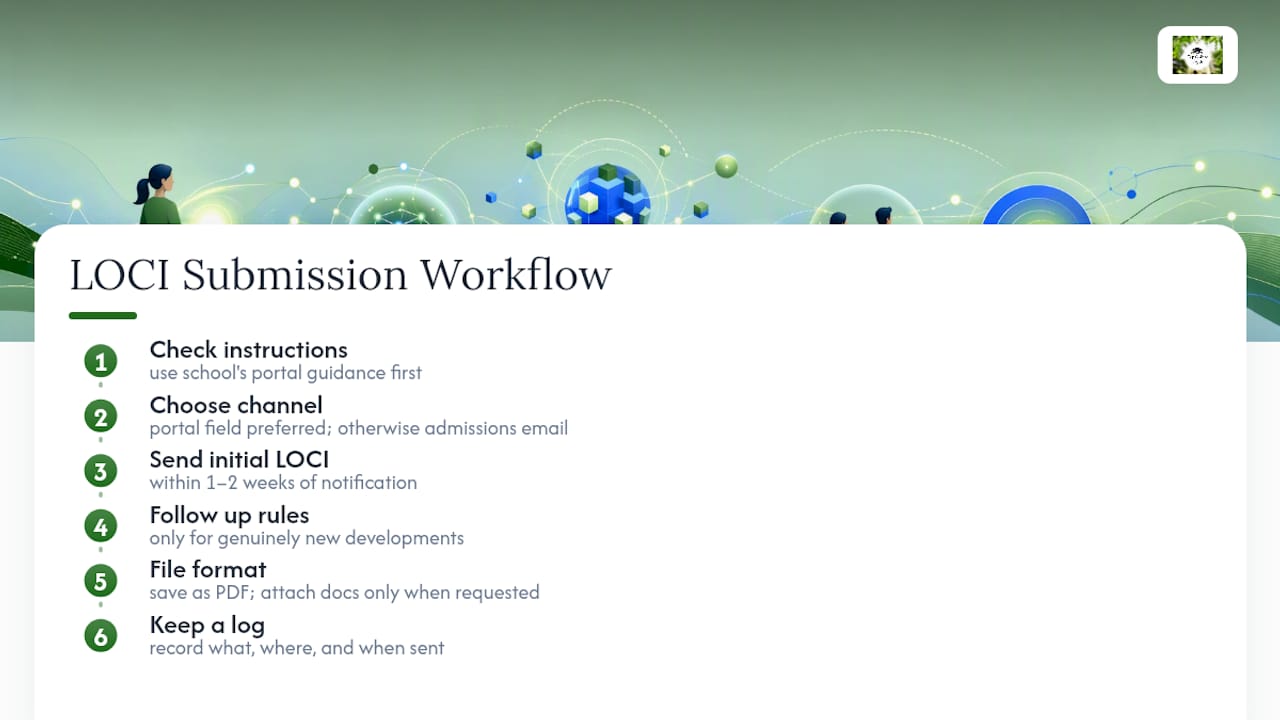
Check the school’s own instructions first. Many admissions portals have a dedicated field for waitlist updates, and that’s almost always the preferred channel to email. If no instructions exist, email the regional admissions representative assigned to your area or the general admissions office.
Timing matters. Send your initial LOCI within one to two weeks of your deferral or waitlist notification. After that, send a follow-up only when a genuinely new development occurs, not on a fixed schedule.
Save your letter as a PDF so formatting survives the upload or email attachment. Attach supporting documents only when requested. Keep a simple log of what you sent, where, and when. If you’re managing five or six schools at once, that log will save you from sending the wrong update to the wrong committee.
Will a Letter of Continued Interest Actually Help?
Institutional guidance is consistent on one point: a LOCI helps most when it adds real, new information, and it does little when it just repeats what the committee already knows. UNC’s admissions office notes that interviews or additional letters “rarely change waitlist status” unless they contain substantive new material, which tells you the bar isn’t sincerity alone. It’s news.
What the data shows: Stanford’s admissions office confirms that how many students get admitted off the waitlist varies widely from year to year, depending on how many admitted students enroll elsewhere. That variability means even a well-written LOCI can’t overcome a year with almost no waitlist movement.
Set your expectations accordingly. A strong letter can tip a close decision or keep you visible when a spot opens. It rarely rescues a file the committee had already ruled out.
Common Mistakes That Weaken a Letter of Continued Interest
Most weak letters fail for the same handful of reasons, and they’re easy to avoid once you know what to watch for.
Restating your entire application or resume instead of adding something new.
Pleading emotionally (“this has always been my dream school”) without backing it with substance.
Naming or comparing other schools’ decisions, or hinting at an enrollment ultimatum.
Sending vague, unquantified updates like “I’ve been working hard” instead of a specific result.
Sending multiple short notes over several weeks instead of one complete, well-timed letter.
One polished letter, sent at the right moment, does more work than three rushed ones.
Expert Tips From Top College Coach: Tactics Most Guides Skip
A commitment statement only works if it sounds true. Say “I will enroll if admitted” only when you mean it. Admissions readers, including the counselors we work with at Top College Coach, can tell a hedged sentence from a genuine one, and a hollow promise can hurt more than saying nothing.
Choose your one update by asking which achievement best supports the major or legal specialty you named in your original application. A biology award matters more to a pre-med applicant than a debate trophy, even if the trophy is more impressive on paper.
Counselor outreach can help, but only when it’s short and credentialed, not a second essay. A brief note from a school counselor confirming an update, like a grade change or new leadership role, carries more weight than a parent’s call to the admissions office ever will.
Pro Tip: If your update touches your intended major, mention the specific department or professor by name. A vague “I’ve grown academically” says nothing; “I’m now leading our Model UN chapter’s policy research, which pairs with your school’s International Relations program” says everything.
An Admissions Counselor’s Take on Continued Interest Letters
Admissions readers remember sincerity paired with substance far more than polish alone. A LOCI that names one real update and states plainly why a school still fits will outlast a dozen generic ones in a reader’s memory.
Be strategic, not desperate. Send it once, make it count, and trust that a clear, specific letter says more about you than a longer one ever could.
— Randy Pryor
Get Help Writing a Letter That Actually Moves the Needle
Writing a LOCI that sounds confident instead of anxious is harder than it looks, especially when you’re staring down a deferral letter at 11 PM. Some college admissions counselors work with deferred and waitlisted students on exactly this: choosing the right update to lead with, drafting a commitment statement that reads as genuine, and building a submission plan across every school still in play.
A session with our team covers wording, timing, and whether counselor outreach makes sense for your situation, the same details this guide walks through, applied directly to your file. If you want a second set of eyes on your letter before it goes out, or you’re not sure which update to lead with, visit Top College Coach to book a consultation and get a submission plan built around your actual deadlines.
Sources
FAQ
What Is a Letter of Continued Interest?
A letter of continued interest is a short, formal message sent to a college or law school after a deferral or waitlist decision, reaffirming your commitment and reporting any meaningful new updates.
When Should You Send a Letter of Continued Interest?
Send your first letter within one to two weeks of your deferral or waitlist notification, and send a follow-up only when a genuinely new development occurs, not on a set schedule.
What Are Some Good Letter of Continued Interest Examples?
A strong example opens with a clear statement of continued interest, adds one or two specific updates tied to your intended major, and closes with a direct commitment statement, as shown in the annotated college and law-school templates above.
How Likely Is It to Get Accepted After Being Deferred or Waitlisted?
Odds vary widely by school and by year, since movement depends on how many admitted students enroll elsewhere; Stanford’s admissions office confirms this variability directly. A well-written LOCI can help at the margins, but it rarely reverses a decision on its own.
Recommended
Comments