25 Facts About Harvard Every Student Should Know
- Aug 1
- 10 min read
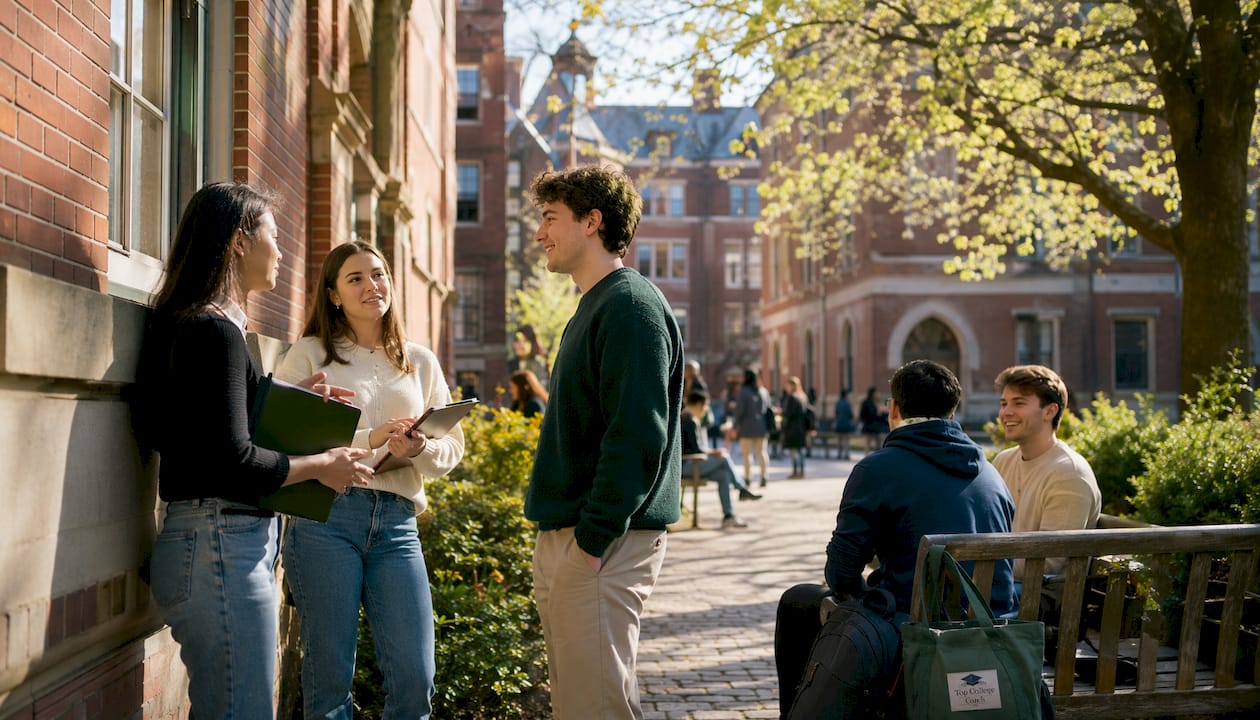
Harvard University is the oldest institution of higher education in the United States, founded in 1636, and today stands as one of the most influential research universities in the world. If you’re researching schools, preparing an application, or simply curious, these facts about Harvard give you a clear, sourced picture of what makes it exceptional.
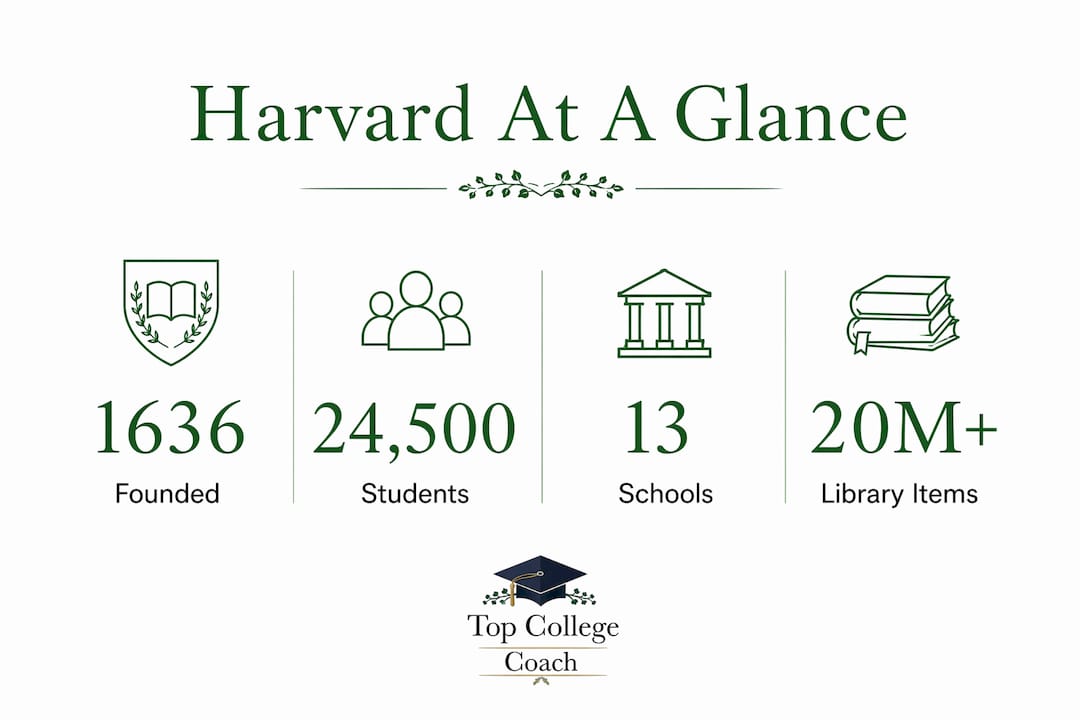
Harvard by the numbers: More than 20 million volumes in its library system, approximately 24,500 total students, 160+ Nobel laureates among alumni and affiliates, and eight U.S. presidents.
Here’s a quick snapshot before we go deeper:
Founded in the mid-1630s by vote of the Massachusetts Bay Colony
Named after benefactor John Harvard in the late 1630s
Spans three main areas: Cambridge, Allston, and Longwood
Composed of Harvard College plus multiple graduate and professional schools
Home to one of the largest academic libraries in the world
Alumni include multiple U.S. presidents and numerous Nobel laureates
Table of Contents
Harvard’s core stats at a glance
Metric | Figure | Source |
Founding year | 1636 | Harvard.edu |
Total students | Approximately 24,500 | Harvard About page |
Alumni worldwide | 400,000+ | Harvard About page |
Harvard Online learners | 35 million+ | Harvard About page |
Library holdings | More than 20 million volumes | Harvard Library |
Nobel laureates (affiliates) | More than 160 | Britannica |
U.S. presidents (alumni) | Eight | Britannica |
Graduate/professional schools | Harvard College plus 13 graduate and professional schools | Harvard.edu |
Harvard’s total enrollment of roughly 24,500 students spans undergraduates, graduate students, and professional school candidates across all disciplines. The endowment figure is not included here because its valuation changes annually; consult Harvard’s Office of Institutional Research for the most current number.
How Harvard began and why it carries that name
The Great and General Court of the Massachusetts Bay Colony authorized the founding of a college in 1636, making Harvard the oldest institution of higher education in the United States. Classes did not actually begin until 1638, and the college did not receive its current name until 1639.
The name comes from John Harvard, a young Puritan minister who died in the late 1630s and left half his estate along with his personal library of several hundred books to the fledgling college. He was a major benefactor, not the founder. That distinction matters because the famous bronze statue in Harvard Yard gets it wrong on multiple counts.
Key early dates:
1636: Massachusetts Bay Colony votes to establish the college
1638: First classes begin; John Harvard dies and bequeaths his estate
1639: The college is officially named Harvard College in his honor
1869: Charles W. Eliot begins a 40-year presidency that transforms Harvard into a modern research university
The Statue of Three Lies in Harvard Yard earns its nickname honestly. The inscription names John Harvard as “Founder,” which is inaccurate. The date on the base reads 1638 rather than the correct founding year of 1636. And the face on the statue is not John Harvard at all, since no portrait of him survived. The model was actually a student from the class of 1882.
Charles W. Eliot’s presidency from 1869 to 1909 reshaped the institution entirely. He introduced elective courses, built out the professional schools, and pushed Harvard from a regional colonial college toward the global research university it is today.

Where Harvard’s campuses are and why Widener Library is extraordinary
Harvard’s physical presence spans three distinct areas. The main campus in Cambridge centers on Harvard Yard, the historic heart of the university and home to undergraduate life. Across the Charles River in Allston, Harvard has developed research facilities and expansion projects. The Longwood campus in Boston houses the medical, dental, and public health schools.
Harvard Yard itself is one of the oldest continuously used academic spaces in the country, surrounded by dormitories, lecture halls, and the iconic Widener Library.

The building’s design includes deep underground floors that extend below the surface to maximize shelf space while preserving the visual scale of the Yard above. Those stacks hold a staggering portion of Harvard Library’s total holdings, which exceed 20 million volumes, making it the largest academic library system in the world. The collection spans 70+ libraries across the university, covering everything from rare manuscripts to digital archives.
Famous alumni and the honors that define Harvard’s reputation
Harvard’s alumni and affiliate network has produced an extraordinary concentration of recognized achievement. Eight U.S. presidents attended Harvard, including John Adams, John F. Kennedy, and Barack Obama. More than 160 Nobel laureates are counted among alumni, faculty, and researchers connected to the university.
Notable categories of Harvard-affiliated honorees include:
U.S. Presidents: Eight, spanning both parties and more than two centuries
Nobel Laureates: 160+ across medicine, economics, physics, chemistry, literature, and peace
Pulitzer Prize winners: Dozens of alumni recognized in journalism, literature, and public service
Fields Medalists: Multiple winners of mathematics’ highest honor
Rhodes and Marshall Scholars: Harvard consistently ranks among the top producers of both
Entrepreneurs and innovators: Alumni have founded or co-founded some of the most consequential technology and media companies in modern history
The breadth of that list reflects something deeper than selectivity. Harvard’s research infrastructure, faculty concentration, and alumni network create conditions where high achievement tends to compound over time.
How Harvard is organized: the College and its 13 schools
Harvard is not a single school. It is a university composed of Harvard College plus 13 graduate and professional schools, each with its own admissions process, faculty, and degree programs.
School | Primary Focus | Degree Types |
Harvard College | Undergraduate liberal arts | A.B., S.B. |
Harvard Business School | MBA and doctoral programs | M.B.A., Ph.D., D.B.A. |
Harvard Medical School | Medicine and biomedical research | M.D., Ph.D. |
Harvard Law School | Legal education | J.D., LL.M., S.J.D. |
Harvard Kennedy School | Public policy and government | M.P.P., M.P.A., Ph.D. |
Harvard Graduate School of Education | Education leadership and policy | Ed.M., Ed.D., Ph.D. |
Harvard School of Public Health | Population health and epidemiology | M.P.H., Ph.D., Sc.D. |
Harvard Divinity School | Theology and religious studies | M.Div., Th.D. |
Harvard Graduate School of Arts & Sciences | Doctoral and master’s research | A.M., Ph.D. |
Harvard College is the undergraduate home, admitting roughly 1,600 to 1,700 students per year into a four-year liberal arts program. The professional schools, including Harvard Business School and Harvard Medical School, operate entirely separate admissions cycles with their own criteria, timelines, and application requirements.
Governance sits with two bodies: the Harvard Corporation (the President and Fellows) and the Board of Overseers. The Corporation handles day-to-day governance; the Overseers provide broader institutional oversight. This structure has remained largely intact since the colonial era, though its composition and scope have evolved considerably.
Harvard’s traditions, quirks, and campus culture
Harvard has a campus culture built on long-standing traditions, spirited rivalries, and a few genuinely strange historical footnotes that make it unlike any other university. For those internationally applying, understanding how overseas students access prep materials can provide important guidance in the admissions process.
The Game: The Harvard–Yale football rivalry, simply called “The Game,” dates to 1875. It is one of the oldest college football rivalries in the country and remains a major social event each fall.
The Smoot: In 1958, MIT student Oliver Smoot lay down repeatedly on the Harvard Bridge to measure its length. The bridge is 364.4 Smoots plus one ear. The markings are still repainted by MIT’s Lambda Chi Alpha fraternity each year.
Housing lottery: Harvard College students live in one of 12 residential Houses after their freshman year, assigned by a lottery that has become a social ritual in itself.
Commencement traditions: Harvard’s Commencement is conducted partly in Latin, a tradition stretching back centuries. The Sheriff of Middlesex County formally opens the ceremony.
Crimson color: Harvard’s official color is Crimson, adopted in 1875 when a crew team wore red bandanas to distinguish themselves during a race. Before that, the school briefly used magenta.
Final clubs: Harvard’s all-male final clubs are private social organizations with no official university affiliation, though they remain a significant part of campus social culture and ongoing institutional debate.
Pro Tip: If you visit Harvard Yard, look for the left foot of the John Harvard statue. Rubbing it for good luck is a campus tradition, which means that foot is noticeably shinier than the rest of the bronze.
One common myth worth clearing up: the Smoot is a Harvard Bridge tradition, but Oliver Smoot was an MIT student, not a Harvard one. The bridge connects Cambridge to Boston and is technically an MIT landmark, not a Harvard one.
What you need to know about Harvard’s admissions process
Harvard College is among the most selective undergraduate programs in the country. Acceptance rates have been in the low single digits in recent years, reflecting both the volume of applications and the depth of the applicant pool.
A few things applicants frequently ask about:
GPA context: Harvard does not publish a minimum GPA, and a high GPA alone does not guarantee admission. The vast majority of admitted students rank near the top of their class, but academic record is one factor among many.
Holistic review: Harvard uses a holistic admissions process that weighs academics, extracurricular depth, personal essays, recommendations, and character. No single metric determines an outcome.
Test policy: Harvard has moved to a test-flexible policy in recent years. Check the Harvard Admissions page directly for the most current SAT/ACT requirements, as policies have shifted post-pandemic.
School-specific processes: Applying to Harvard College is entirely different from applying to Harvard Business School or Harvard Medical School. Each school has its own deadlines, requirements, and evaluation criteria.
For a deeper look at what the Ivy League admissions process actually involves, including how holistic review works across all eight schools, the picture is more nuanced than acceptance rate numbers suggest.
Pro Tip: Admissions counselors consistently note that Harvard applicants who stand out have a clear “spike” — a deep, demonstrated commitment in one area — rather than a broad list of activities with no central thread. Depth beats breadth at this level.
From an admissions counselor’s perspective: Harvard’s multi-school structure means the question “How do I get into Harvard?” depends entirely on which school you’re targeting. A student aiming for Harvard College needs a fundamentally different strategy than one applying to Harvard Kennedy School or Harvard Medical School. Understanding the Harvard application process for your specific program is the first step toward a credible application.
Individual outcomes vary. Admissions decisions depend on the full application in context of a given year’s applicant pool, and no counselor or resource can guarantee admission to any selective institution.
Key Takeaways
Harvard is the oldest U.S. university, a multi-school research institution with the world’s largest academic library, and one of the most selective undergraduate programs in the country.
Point | Details |
Founding and name | Founded in 1636 by the Massachusetts Bay Colony; named after benefactor John Harvard in 1639, not its founder. |
Scale of the library | Harvard Library holds more than 20 million volumes, the largest academic library system in the world. |
Alumni honors | More than 160 Nobel laureates and eight U.S. presidents are counted among Harvard’s alumni and affiliates. |
Multi-school structure | Harvard College is the undergraduate school; Harvard University includes 13 graduate and professional schools, each running separate admissions processes. |
Top College Coach | Top College Coach helps high-achieving students build a credible, strategic application to Harvard and other Ivy League universities. |
What these facts actually mean if you’re considering Harvard
The numbers are impressive, but the most useful thing to take from this overview is that Harvard is not one institution. It is a collection of schools, each with its own culture, admissions standards, and student experience. A student who thrives in Harvard College’s undergraduate environment may find the professional schools feel entirely different, and vice versa.
When families come to us at Top College Coach, the first conversation is rarely about Harvard’s acceptance rate. It’s about fit: Does this student’s academic trajectory, extracurricular depth, and personal story align with what Harvard College is actually looking for? That question requires honest self-assessment, not just a list of credentials.
Harvard’s recent institutional debates over campus culture, diversity, and reform are worth following too. They reflect a university actively negotiating its identity, which means the Harvard a student enters today is not static. It is a living institution shaped by the people in it.
If you’re at the stage of seriously evaluating Harvard as a target school, the next step is understanding how your profile compares to admitted students, not just in GPA and test scores, but in the depth of your story. That’s where expert guidance makes a real difference. For a broader view of how Harvard compares to other top programs, the Ivy League vs. Top 20 comparison is a useful starting point.
Top College Coach can help you apply with confidence
Knowing the facts about Harvard is one thing. Building an application that earns a serious look from the admissions committee is another. Top College Coach works with high-achieving students and their families to develop a clear, strategic approach to Ivy League and Top 20 applications, from early high school planning through final submission.
Our team includes former admissions officers and current Ivy League student mentors who review essays, prepare students for interviews, and help families understand exactly what selective schools are evaluating. We work with students targeting Harvard College as well as Harvard’s graduate and professional programs.
Ready to build a strategy that gives your application real strength? Schedule a consultation with Top College Coach and take the first step toward a credible, well-prepared Harvard application.
Authoritative sources for further reading
The facts in this article draw from the following primary and authoritative sources. For the most current admissions statistics, enrollment figures, and policy updates, always consult Harvard’s official pages directly.
Harvard University — About: Official overview of enrollment, alumni reach, campus locations, and institutional mission.
Harvard University History: Primary source for founding date, John Harvard’s role, and the Statue of Three Lies.
Harvard In Focus — Welcome to Harvard: Details on Widener Library’s origin and campus highlights.
Harvard Gazette — How Much Do You Know About Harvard?: Commencement lore, campus traditions, and historical trivia from Harvard’s own publication.
Harvard Office of Institutional Research — Fact Book: The authoritative source for current student, faculty, tuition, and financial data.
Harvard University — Britannica: Independent overview of alumni honors, presidential history, and institutional evolution.
Harvard University — Wikipedia: Useful aggregated reference for library holdings and historical context, best verified against primary sources.
Harvard Business School: Official site for HBS programs, admissions requirements, and MBA information.
Recommended
Comments